Residential Stair Lifts: A Comprehensive Educational Overview
July 20, 2026For many older adults, home is more than just a residence. It represents familiarity, comfort, and independence. Therefore, it is quite understandable that the idea of aging in place has become an increasingly important goal. According to AARP research, three-quarters of those aged 50 and older would prefer to live out their lives in their own homes.
Most homes were not built with long-term accessibility in mind. Houses with multiple floors can become problematic over time due to aging, injury, arthritis, or other mobility limitations. Fortunately, home stair lifts are great solutions that allow access to every room without sacrificing safety or independence.
Why Stairs Become a Safety Concern
It can be difficult to navigate stairs as one ages. Changes in balance, strength, flexibility, and vision can all contribute to a greater risk of fall. According to the National Institute on Aging, more than 25 percent of people over the age of 65 fall at least once every year, with many falls leading to serious injuries or even death.
Lack of balance and the fear of falling can create significant impacts on the senior’s sense of mobility and quality of life. The fear of falling that leads seniors to not only limit their activities but to avoid certain areas of their homes.
How Residential Stair Lifts Work
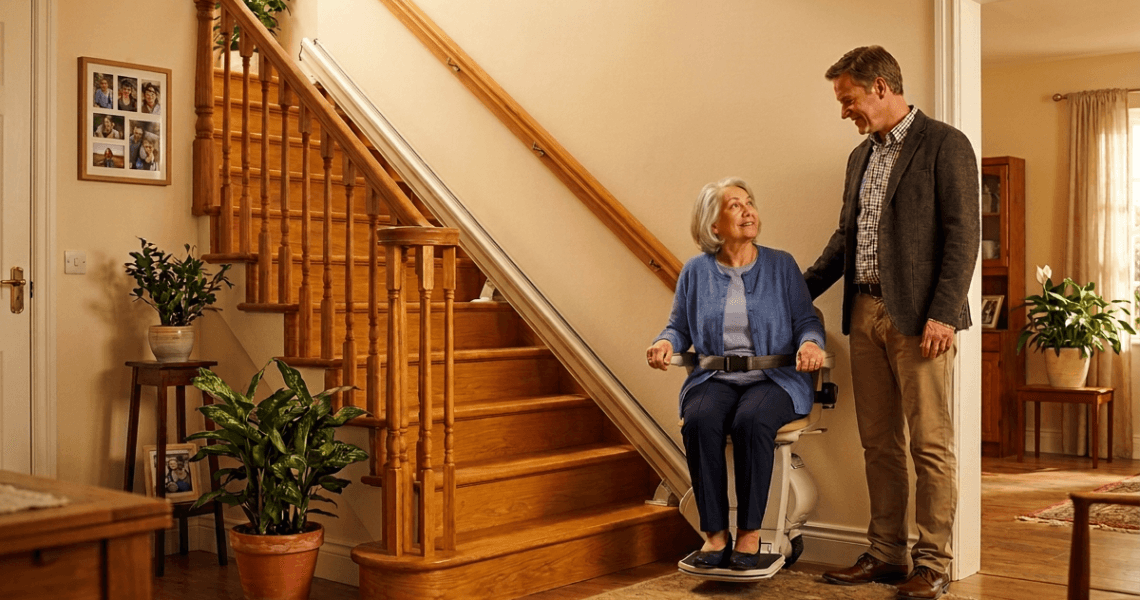
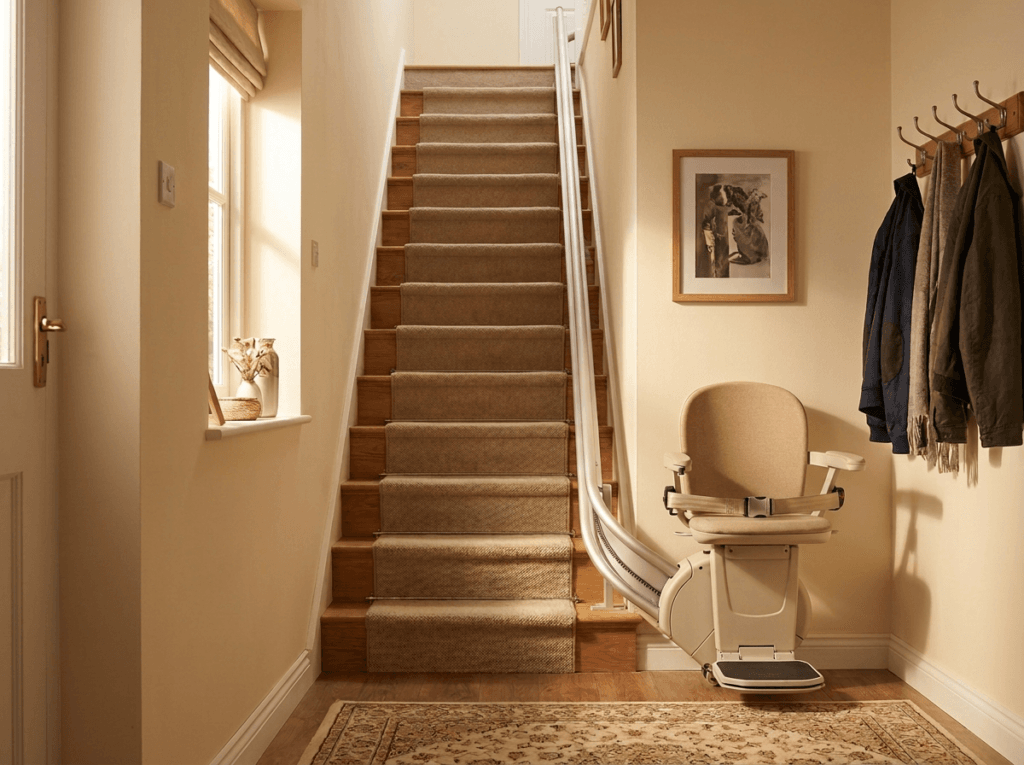
A residential mobility lift is a motorized chair that runs along a rail that connects directly to the staircase. The user sits in a comfortable seat, fastens a safety belt, and then operates the stair lift using simple controls found on the armrest or a handheld remote control. Today’s home stair lifts are powered by rechargeable batteries that automatically charge when the lift is parked. As a result, the lift can operate even during power outages. Different kinds of residential stair lifts are available depending on the design of the home. Straight stair lifts are made for staircases without any turns or landings, whereas curved stair lifts are specially adapted to connect more complicated staircases.
Benefits for Seniors, Disabled Individuals, and Families
The main benefits offered by a residential mobility lift include providing access to all areas of your home without having to either move bedrooms or relocate completely. Elderly and disabled individuals, as a result, can reduce fall risks, maintain independence, and improve overall quality of life.
There are many benefits for family members as well. Family members often develop anxieties regarding the safety of their elderly relatives, especially when they are living on their own and have previously fallen. With an indoor stair lift, this can reduce caregiver concerns by knowing their family member can travel safely and reliably from floor to floor.
When to Consider a Stair Lift
Although every situation and individual are unique, there are some indicators that will tell you when it is the right time to look into a domestic stair lift:
- You have difficulty climbing stairs without assistance
- You feel fatigued or out of breath when using the stairs
- You are worrisome about your balance or stability
- You have suffered previous falls or near-falls while using stairs
- You have avoided certain parts of your home because of the stairs
- You want to continue to live at home safely and proactively
Choosing the Right Accessibility Partner
Choosing a suitable indoor stair lift has more to do than just picking the kind of product. Every individual as well as every home have different mobility and space requirements. Therefore, it is essential to contact an expert in mobility matters before making your choice.
EZ Living Concepts works closely with homeowners and families to formulate customized solutions that enhance user independence and safety in the home. We provide the professional evaluations and expert installation services required to continue living comfortably and independently at home.
Ready to learn more about residential stair lifts? Contact us today at (610)-583-9000 or sales@ezlivingconcepts.com. A safer, more accessible home starts with the right accessibility partner.