Can You Use a Stair Lift with a Wheelchair?
December 20, 2025
For individuals who use a wheelchair, navigating stairs can pose a major barrier to independence, especially in multi-level homes or buildings. Research shows that environmental barriers like stairways significantly limit mobility and quality of life for people using wheeled mobility devices. However, for individuals who use a wheelchair, wheelchair stair lifts may not be the best or even a usable solution. The key is understanding the differences between stair lifts versus wheelchair accessible mobility devices so users and their families can make safe, effective, and inclusive choices when deciding how to provide home accessibility. This article will provide a breakdown of the many different types of stairway mobility devices, the various medical/ legal considerations as well as providing guidelines for individuals and their caregivers to use when selecting the stairway lift system that will work best for their needs, ensure their safety, and complement the layout of their home.
Types of Mobility Devices for Stairs
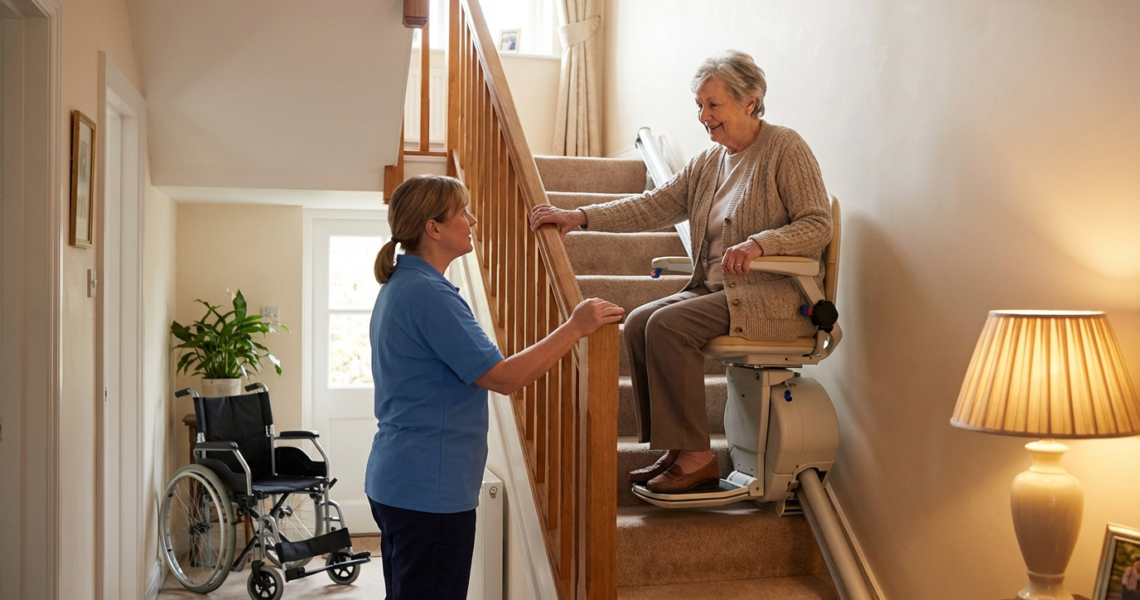
Stair Lifts: Stair lifts consist of a motorized elevator chair attached to rails that allows people who can use chairs to go up and down staircases. Stair lifts require users to transfer from their wheelchair into the elevator chair. Therefore, they are designed for individuals who have sufficient upper-body strength, balance, and safety skills to transfer from their wheelchair to the stair lift safely, whether independently or with assistance.
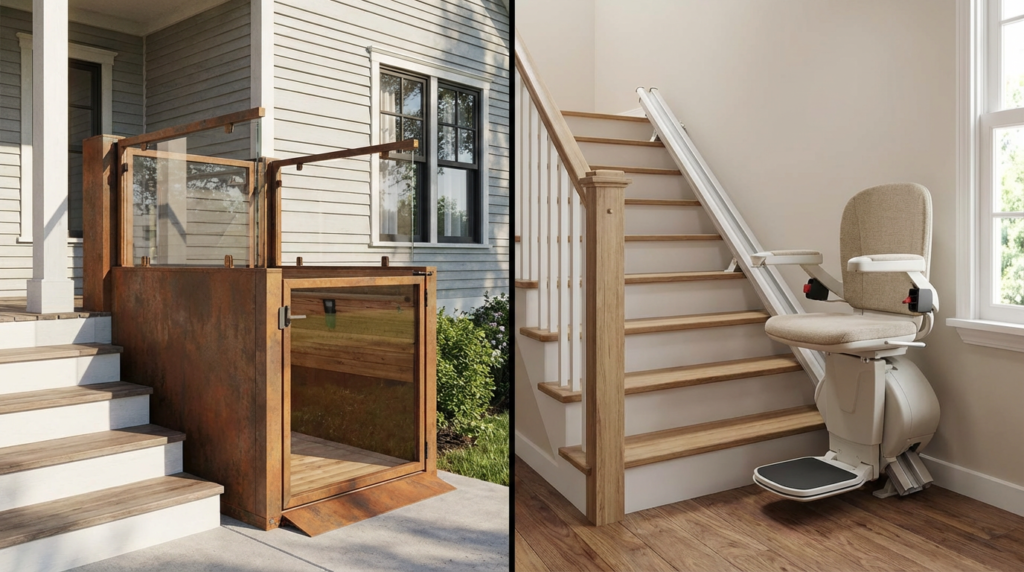
Wheelchair Stair Lifts/Platform Lifts: Vertical platform lifts (VPL) and inclined platform lifts (IPL) are designed for use by a user who remains seated in their wheelchair while using the lift. While a standard wheelchair stair lift requires transfer, a platform lift allows users to remain seated. These types of lifts are ideally suited to users who cannot safely transfer from their wheelchair or cannot operate a stair lift. Vertical and inclined platform lifts can be installed inside or outside your home, and their configuration can vary depending on the height and space limitations of your home.
Inclined Platform Lifts: Inclined platform lifts (IPLs) move up and down the steps on stairways similar to stair lifts, but instead of sitting side by side, they have a foldable platform that is much larger than a standard stair lift that is able to accommodate the user’s wheelchair while using the IPL. IPL’s are more bulky than traditional stair lifts, but they are essential for individuals who need to stay seated in their wheelchairs and cannot use a vertical lift due to lack of vertical space (i.e., low ceilings).
Stair-Gliding Wheelchairs: There are powered wheelchairs that will climb stairs, although they are expensive (when compared with the standard conventional powered wheelchair) and not widely available. These stair-climbing wheelchairs are only designed for concise staircases. The majority of them require the assistance of a trained individual to operate the wheelchair up the stairs safely, which makes them impractical for daily use in a person’s home.
Medical & Accessibility Considerations
For many users, transferring onto a wheelchair stair lift may pose risks of falls or joint strain. Those who have trouble with balance, limited strength, or have medical conditions such as multiple sclerosis (MS) or Parkinson’s disease may be at greater risk of fall-related injuries, pressure-related injuries (for both the individual transferring to and the individual providing the transfer), or injuries from overuse for the caregiver.
A study published in The National Library of Medicine indicates that devices that allow the user to stay in their primary mobility device (and consequently maintain their autonomy) significantly reduce the risk of secondary injury to the user and allow them more control over their daily activities. Physical therapists often evaluate whether a wheelchair stair lift is safe based on the user’s strength and range of motion.
A user needing assistance to utilize a wheelchair stair lift is likely a better fit for an inclined platform lift, which allows a person to continue using their wheelchair and is also safer.
What are Wheelchair Stair Lift Costs?
The average wheelchair stair lift costs more than a standard stair lift due to the platform size and safety features. Luckily, there is assistance available if you meet the following criteria:
- Medicaid Waivers (may differ by state) may help to cover the expense of modifying your home.
- VA Grants may help qualifying disabled veterans pay for the cost of a vertical platform lift.
- Organizations such as Rebuilding Together and United Cerebral Palsy may offer financial assistance.
- Local Agencies on Aging often provide funding for improved access to homes and apartment buildings or may refer you to other organizations that can provide assistance.
Some private health insurance or Long Term Care Insurance Policies may cover part of your lift when seen as medically necessary.

Final Thoughts: Choosing the Right Solution
There are many other factors to consider when determining whether it is safe, practical, or even feasible to utilize a stair lift. For those who can transfer safely and have enough space around the stairway, wheelchair stair lifts can be economically beneficial. However, after considering the practicality of utilizing a stair lift, the vast majority of full-time wheelchair users will find a vertical platform lift or home elevator to be the only option that provides sufficient accessibility and is medically safe.
Selecting the correct system is based upon the following:
- Your level of mobility and ability to transfer
- The layout of your home and design of your stairs
- Your available funds and sources of funding for accessibility
- Your long-term goals of maintaining independent living.
Whether it’s a platform model or an inclined lift, choosing the right wheelchair stair lift ensures safety, independence, and long-term mobility. If you are uncertain what type of system will best suit your needs, contacting and working with a Certified Mobility Specialist like EZ Living Concepts may be beneficial.
EZ Living Concepts offers free home consultations and additional personalized services that can aid in maintaining a safe and independent lifestyle. Contact us today at (610)-583-9000 or sales@ezlivingconcepts.com to get started.